After the decade just past, many people in Western countries could perhaps be understood for harbouring a subliminal unease at Islamic nations, organisations and even people. This, if we are honest has not been the occupation merely of the BNP or English Defence League. Islam, in its cartoon-villain portrayal has been 'the bad guy' for ten years or more with little real differentiation between its various strands.
But now we have the opportunity to see much of the Islamic world at its ideological best. What strikes me most about this is the overwhelming bravery, a cousin perhaps of the same conviction however misguided that has made fundamentalist Islam such a dangerous enemy. Any way you regard it, these are people who are willing to die for what they believe in. Now it seems that the peoples of Tunisia, Egypt, Bahrain, Libya and even Iran are turning this most powerful of weapons upon their long entrenched, long unquestioned masters.
It seems that we can respond to this sweeping wave of democratic expression in a number of ways. There is noticeable unease at the 'Real Politic' of the situation. Dictators however awful have provided a stability of sorts and also perpetuated a laziness in our commercially orientated diplomacy. Far easier to understand the whims of one overlord, however eccentric than embrace the messy, complicated, mannered chaos of a democratic government, particularly in its messy foetal stages.
Britain and the US, outward cheerleaders for democracy have been chastened in this expression by the long heralded elections in Gaza which brought Hamas to power. It seems there is no position of response for those who express their championed democratic rights by voting for people we don't like. So Obama and friends sit uncomfortably on the fence, waiting and hoping for the settling of the dust in such a way that their own interests in the region are not compromised. This is not a heartless response. Pragmatism keeps the lights on and means that there is petrol at the pumps.
However, as the Libyan uprising encounters the most cold-blooded regime response yet, the time may be coming when the outside world will have to choose whether to act in support, daring that such an action would be received well by the people and not in the oft painted way of their dictators who claim a sinister Western influence and seek to unite their people behind a xenophobic patriotism. A risk yes, but less so at a time when people are no longer slavishly buying the pantomime posturing of their jilted masters.
As people who generally do not hold our leaders to such account, the answer for now may be to embrace this action ourselves through the same social media as have given oxygen to the popular movements and helped turn whispered discontent into real revolutions. In any case, these new democracies are going to need support and reintegration into the international political and economic communities and we as a people, if not as a nation do not want to be seen as having perpetuated the regimes that are now close to collapse.
In short, just like in the changing countries on our news channels, what we do now as a people and as a country is vitally important. Can we find some of the same great motivation which for us requires no more bravery than to turn on our computers and email our friends and MPs?
Or will our brothers and sisters in the East who have been democratic for all of a week once again put us to shame?
http://www.nickbain.co.uk/
Monday, 21 February 2011

Wednesday, 8 December 2010
Taxing Flights Taxes
 Right. So the planet is warming and it's at least partly our fault. I'm no climate expert but I can sign on for this in theory and principle. Smart people seem to think so and it makes a certain amount of sense to me.
According to various statistics, aviation accounts for anything up to 5% of the world's carbon emissions. In response to this, the government has introduced taxation policies designed to act as 'Economic disincentives' to keep people out of the sky.
Let's examine the phrase 'Economic disincentive' aka, the government's excuse for presenting the aviation industry and by default, us with tax bills on flights that can be anything up to 100% of the cost of the flight.
This is grim but bearable if you're trying to get from London to Dublin. This disincentive might encourage you to get a ferry, but what about further afield?
Here's an example. As a pale and interesting Scotsman, I make a relatively recent and strange addition to London's Caribbean Community. (It still takes a couple of attempts for me to spell Caribbean) However, by extension of my beautiful lady, I find myself part of a family still largely based on the island of St Lucia.
St Lucia is 4,222 miles from London.
 So let's examine our economic disincentives again. The best fare, assuming you can book well in advance currently rebounds around the price comparison websites at £376. Not bad I hear you say. More than a few would pay that to escape our winter and bask in an average daily temperature of 27 degrees.
But here comes the tax, crashing in at a whopping £220 bringing the total cost up to around the £600 mark. This is, it must be emphasised, the best case scenario. (Fly tomorrow and expect to pay double that.)
My question is, how can a disincentive work in this case? It's a long swim to St Lucia. In my experience, the main reasons an average-income family goes home are to see family, attend weddings and in the case of my girlfriend's family, funerals.
My girlfriend's mum has had to bury her sister-in-law and her own mother within three months and has consequently given the tax man the best part of £500. The second time, we went with her and gave him another £500. In each case, she had no choice but to fly, no choice but to travel in peak time.

Ergo, inflated air travel taxation cannot help but punish the people who have no alternative but to travel. It is disproportionately hard on people with family abroad - ethic minorities being an obvious part of this.
It strikes me that this policy has been designed primarily for the government to:
A. Line its own pocket
B. Be seen to be 'doing something' about climate change whilst doing very little about industry and agricultural emissions (which make up a far higher percentage of global emissions) and failing to secure stronger international agreement
C. Continue to transfer responsibility for carbon emissions away from the state and onto the individual to cover the fact that the state does very little to change things
D. Demonise the aviation industry (A fun game we can all enjoy)
E. Try to create some sort of bizarre alternate reality where flying in a plane, rather than being an everyday reality of our globalised, multicultural society is in fact a luxury enjoyed by carefree, voyeuristic, middle-class holiday makers who must be made to see how selfish they're being through the bleeding of their pockets in the hope that they learn the error of their ways.
It is true that some airlines offer 'Bereavement deals', which discount the fare, but these are often only available on business class tickets and in effect cost more than the economy fare. And though stretched by increasing fuel prices and a recession, airlines are at least forced to keep their prices in check by competition.
The government has no such compulsion.
So you have a situation where because of the taxes nominally designed to make fewer people fly, a daughter must either stay away, or go into debt so she can fly home, alone, to bury her mother. In most cases, she'll find a way to fly anyway, rendering the policy barbaric and pointless.
A solution?
 Lower aviation taxes on economy flights and come up with a strategy to fight global warming that doesn't ground people on low incomes. Perhaps counter this with an according rise in tax on business and first class fares. As a proportion of a fare, this effects people less and would only strike those who can either afford it, or are on business in which instance the tax can be claimed back in any case.
And if that cannot be done...
Perhaps the government, in line with the baby steps the airlines are making could introduce a system whereby people can at the very least claim back the aviation tax on bereavement flights for immediate family members.
And please stop guilting us for travelling! Its the 21st century after all...
http://www.nickbain.co.uk/
Sunday, 21 November 2010
Should I Wear Contact Lenses?
Most wearers of glasses will entertain this question at some point. As someone who routinely left my glasses on public transport, contacts began to look distinctly economical, so I decided to switch to them.
Choosing the lens for you
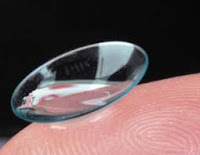 I had not considered contacts before because I have astigmatism, something that was only comparatively recently made treatable with contacts. I loved the idea of being able to abandon my glasses. For those with more general prescriptions there is a massive choice of daily, weekly and monthly disposable options.
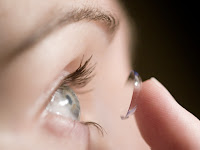 The sensation is strange at first, but it is quite amazing how soon the eye forgets the lens is even there. I opted for soft lenses as they are more comfortable than hard lenses and barely noticed as the optician slid them into my eyes with practiced ease. At first and unsurprisingly, it feels like you have something in your eye, but I found my eyes adjusted remarkably quickly and the quality of vision was excellent.
 This was compounded by my girlfriend, (A long time contact lens wearer) who, after enjoying my plight for over an hour, removed her daily disposables with a single, deft brushing motion as if merely wiping her brow. I forgave her eventually.
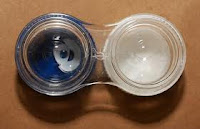
With most kinds of lens, it isn’t advisable to leave them in overnight. Should that happen, usually after a night out, you have to rehydrate them with solution. They are remarkably durable and rehydrate when stored in their container.
Choosing the lens for you
 I had not considered contacts before because I have astigmatism, something that was only comparatively recently made treatable with contacts. I loved the idea of being able to abandon my glasses. For those with more general prescriptions there is a massive choice of daily, weekly and monthly disposable options.
Putting them in
 The sensation is strange at first, but it is quite amazing how soon the eye forgets the lens is even there. I opted for soft lenses as they are more comfortable than hard lenses and barely noticed as the optician slid them into my eyes with practiced ease. At first and unsurprisingly, it feels like you have something in your eye, but I found my eyes adjusted remarkably quickly and the quality of vision was excellent.
Buoyed by this confidence, I opted to keep them in. The optician had shown me how to remove them. How hard could it be..?
Taking them out
Later that night, under the dim, hateful light of our bathroom’s energy-saving bulb, eyes raw from the persistent ineffectual fumbling of my suddenly giant, cumbersome fingers, I realised this was going to take some practice.
Later that night, under the dim, hateful light of our bathroom’s energy-saving bulb, eyes raw from the persistent ineffectual fumbling of my suddenly giant, cumbersome fingers, I realised this was going to take some practice.
 This was compounded by my girlfriend, (A long time contact lens wearer) who, after enjoying my plight for over an hour, removed her daily disposables with a single, deft brushing motion as if merely wiping her brow. I forgave her eventually.
 With most kinds of lens, it isn’t advisable to leave them in overnight. Should that happen, usually after a night out, you have to rehydrate them with solution. They are remarkably durable and rehydrate when stored in their container.
The Benefits
So whilst it must be said that they take some getting used to, particularly in their application and removal, you only feel like a troll attempting brain surgery for a few days. It does get much easier. This frees you up to enjoy the benefits. You do forget you’re wearing them, and the vision is perfect. You either dispose of them daily or clean them with a dunk in solution overnight. No more smeary, steamed up, rain-fogged glasses to leave on buses.
Your eyes might well react to them a little at first. In my first week wearing lenses I was turned away from a club by bouncers because my eyes were a bit red. They were good natured enough when I explained I wasn’t off my face on drugs but just inept at putting in my lenses. One of the bouncers understood. He wore contacts himself and they were a lifesaver because he couldn’t wear glasses on the doors.
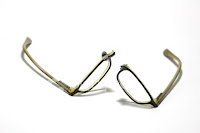
Apparently, people hit bouncers who wear glasses.

Apparently, people hit bouncers who wear glasses.
So Goodbye to Glasses!
Once you have your prescription, the High Street chains are very keen to sign you into monthly contracts but some online retailers guarantee to provide the cheapest non-subscription contact lenses. This really saves you money because I soon found that though I didn’t wear my lenses all the time, vast quantities kept arriving every month. I cancelled my subscription and now just top up when I need to.
So now, I am a fully converted contact lens wearer, and I’ve quite literally, never looked back.
http://www.nickbain.co.uk/
http://www.nickbain.co.uk/
Subscribe to:
Posts (Atom)